DinkyBalls.
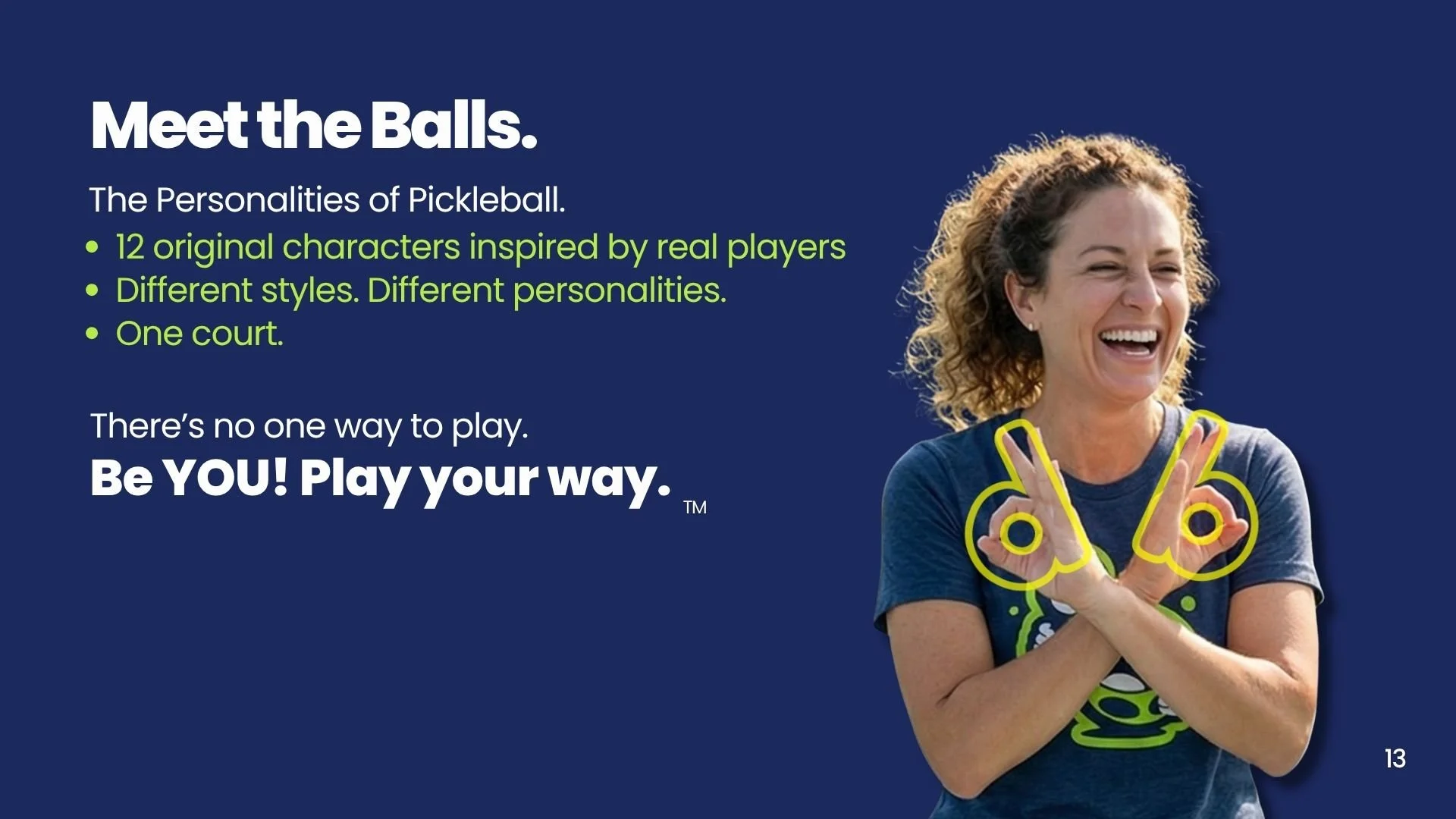
The Personalities of Pickleball.
A character-driven licensing platform built around the people, inside culture, and everyday identity of pickleball.
Pickleball’s participation growth is proven.
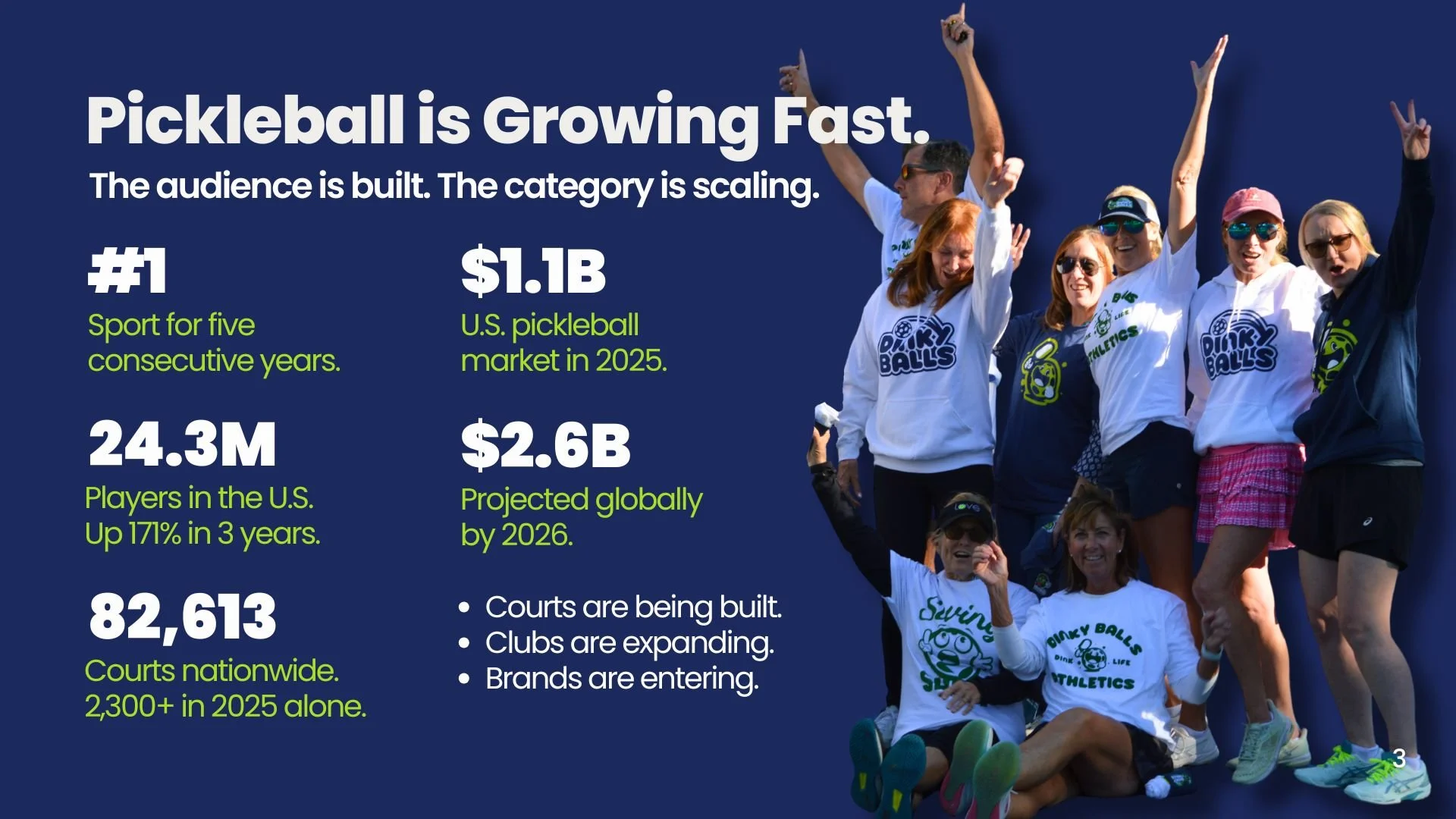
The sport reached 19.8 million U.S. participants in 2024, up 45.8% year over year and 311% over three years, making it the fastest-growing sport in the U.S. for the fourth straight year.
Its sponsor and product ecosystem is scaling.
Court development continues, sponsor rosters are expanding, and broader market estimates now place the U.S. pickleball market around $1.1B in 2025 and the global market around $2.6B in 2025, with apparel and equipment expected to grow substantially over the next decade.
What the category still lacks is a defining character-driven brand.
Pickleball has paddles, apparel, tournaments, clubs, and coaching. What it does not have is a brand that captures how players actually see themselves and each other.
DinkyBalls fills that gap.
DinkyBalls is the personality layer of pickleball: a character-driven brand built for gifting, identity, and everyday play, with early traction already visible across DTC, events, clubs, media, interactive tools, and repeatable visual IP.
The World of Pickleball.
Backyard Beginnings.
Pickleball was created in 1965 on Bainbridge Island, Washington by Joel Pritchard, Bill Bell, and Barney McCallum. What began as an improvised backyard game is now a large, culturally active participation sport with national governing bodies, pro tours, sponsor ecosystems, and a rapidly expanding place-to-play footprint.
This category is attractive because it is: easy to learn, social by nature, multi-generational, community-led, and increasingly visible in media, events, and retail. USA Pickleball’s 2025 growth report says the Pickleheads/USA Pickleball database now includes 82,613 known courts and 18,258 locations nationwide, with more than 2,300 new locations added in 2025 alone. That is not just participation growth. That is infrastructure growth.
Why are so many people playing.
Low barrier to entry, fast learning curve, strong doubles/social behavior, accessible across age and skill, and blends sport, community, and lifestyle. This is exactly the kind of category where culture-based IP can win.
Why This Creates a Licensing Window.
Most emerging sports categories mature in stages:
Equipment. Apparel. Events/Media. Cultural/Lifestyle IP
Pickleball has already moved through the first three. Equipment brands exist. Clubs and leagues are scaling. Sponsorship and media are growing. What remains open is the white space around identity, humor, ritual, gifting, and player self-recognition. That window does not stay open forever.
Pickleball is no longer too early.
It is already big enough to matter. But it is still early enough for a brand to define part of the culture. That is why now matters.
Where DinkyBalls Came From.
DinkyBalls did not come from a brainstorm. It came from standing courtside and noticing people.
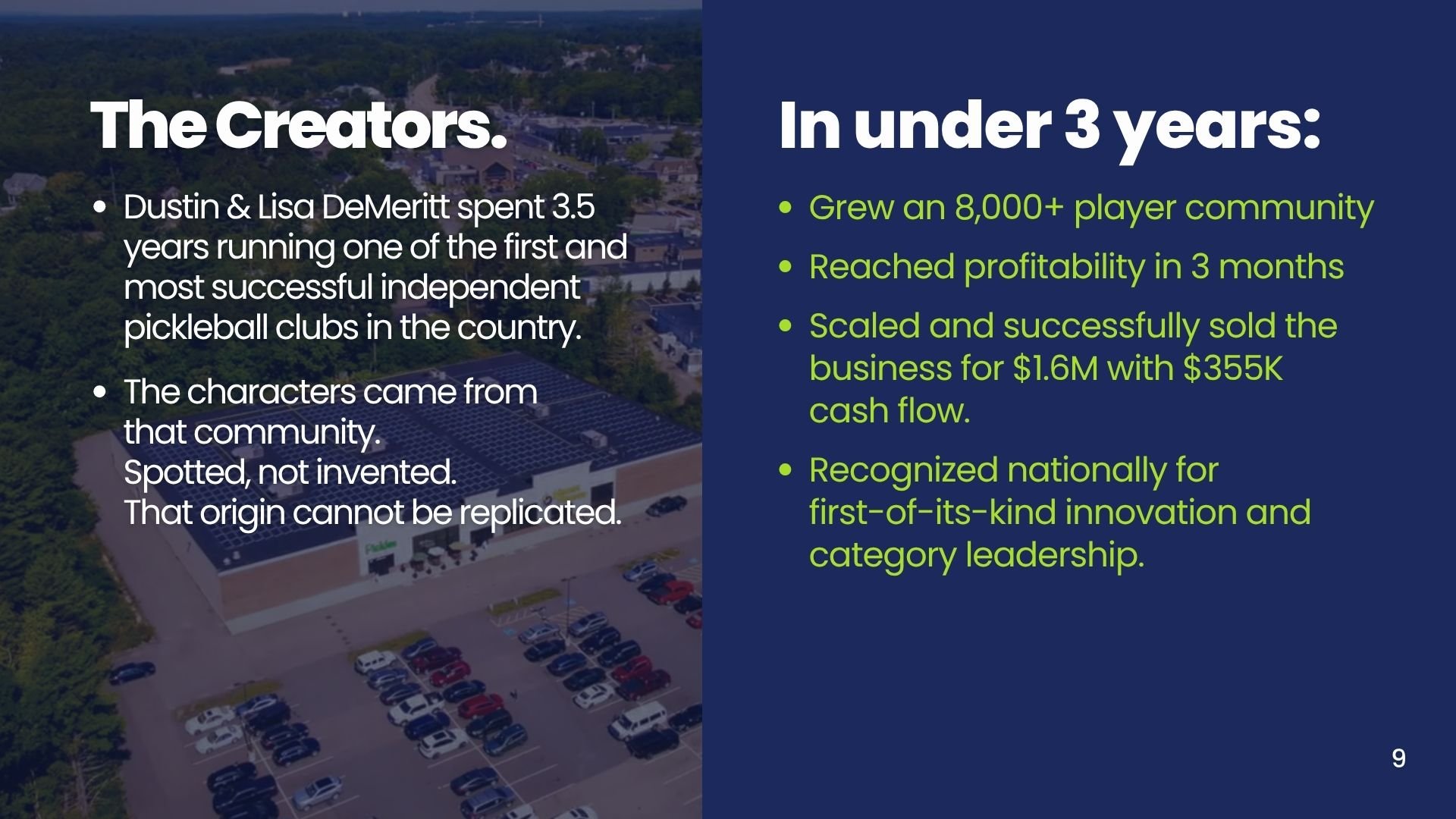
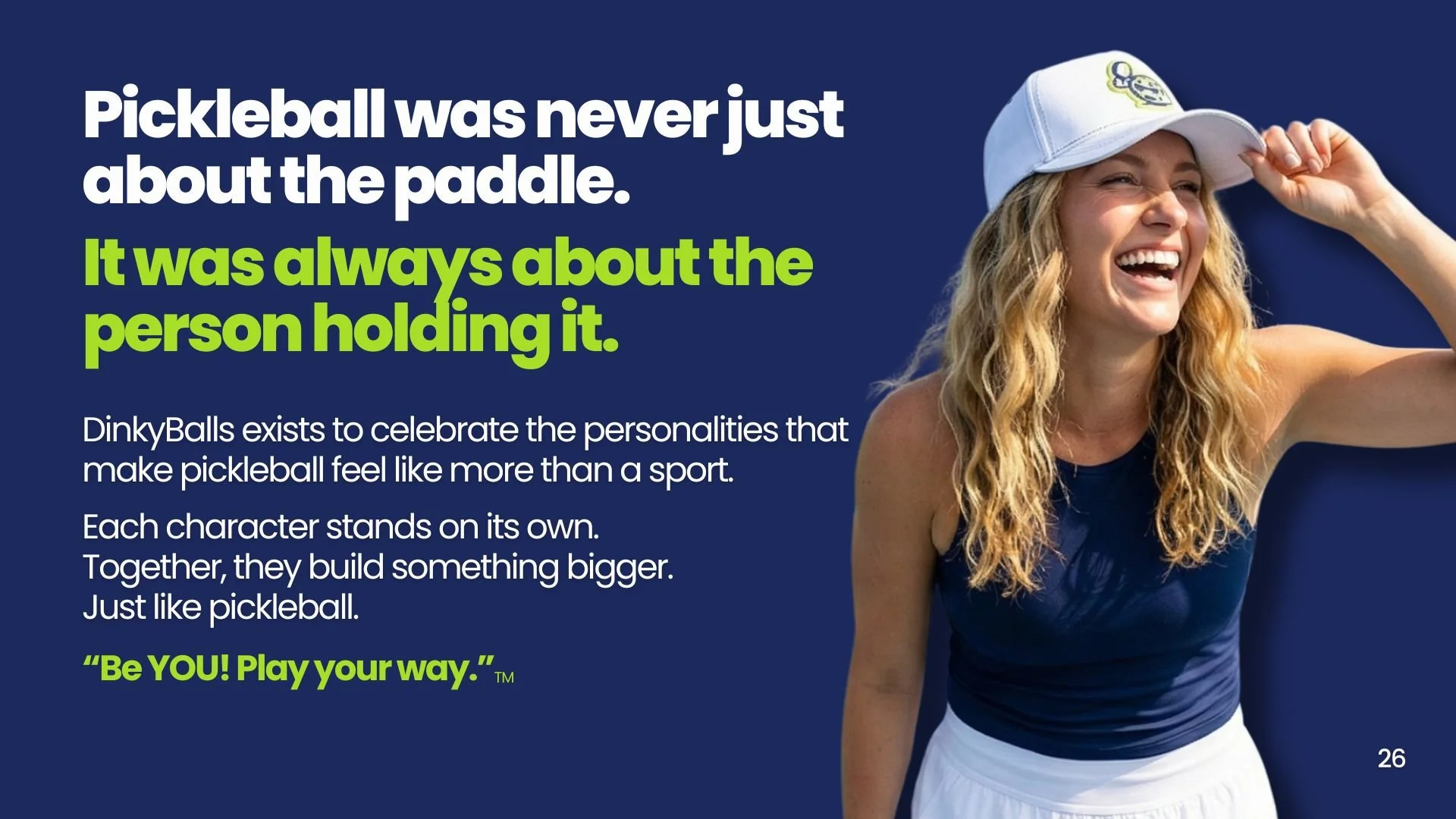
Lisa and Dustin DeMeritt, founders of DinkyBalls and former owners of Pickles Indoor Pickleball Club, watched players come for the game and stay for each other. Over time, one thing became obvious: pickleball is not just play, it is personality. Every point, every style, every player brings something different to the court. DinkyBalls began as a reflection of those real player personalities, brought to life through characters that celebrate how people play and who they are. That origin matters because it is native to the culture. It was observed, not invented.
What DinkyBalls Is.
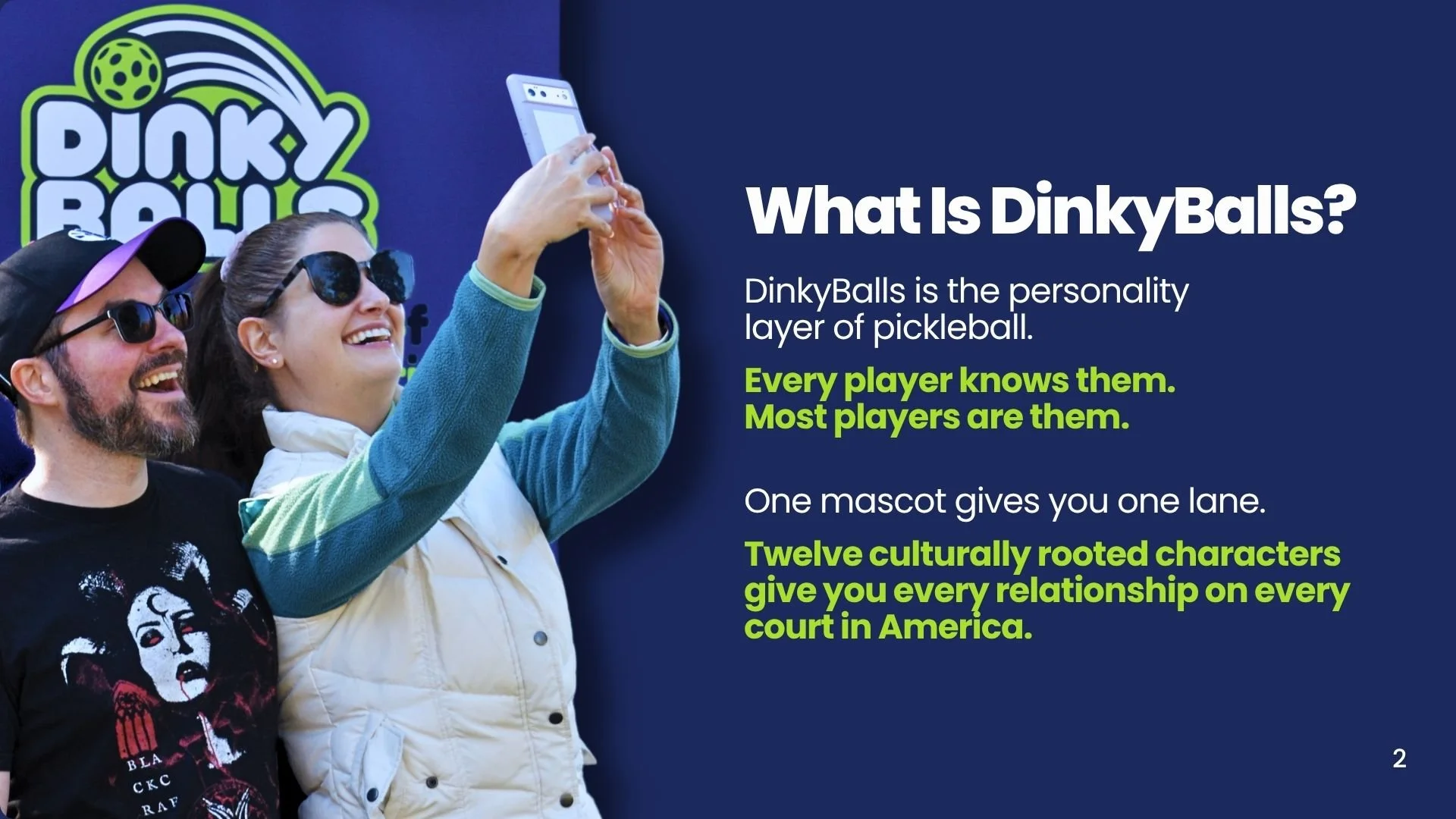
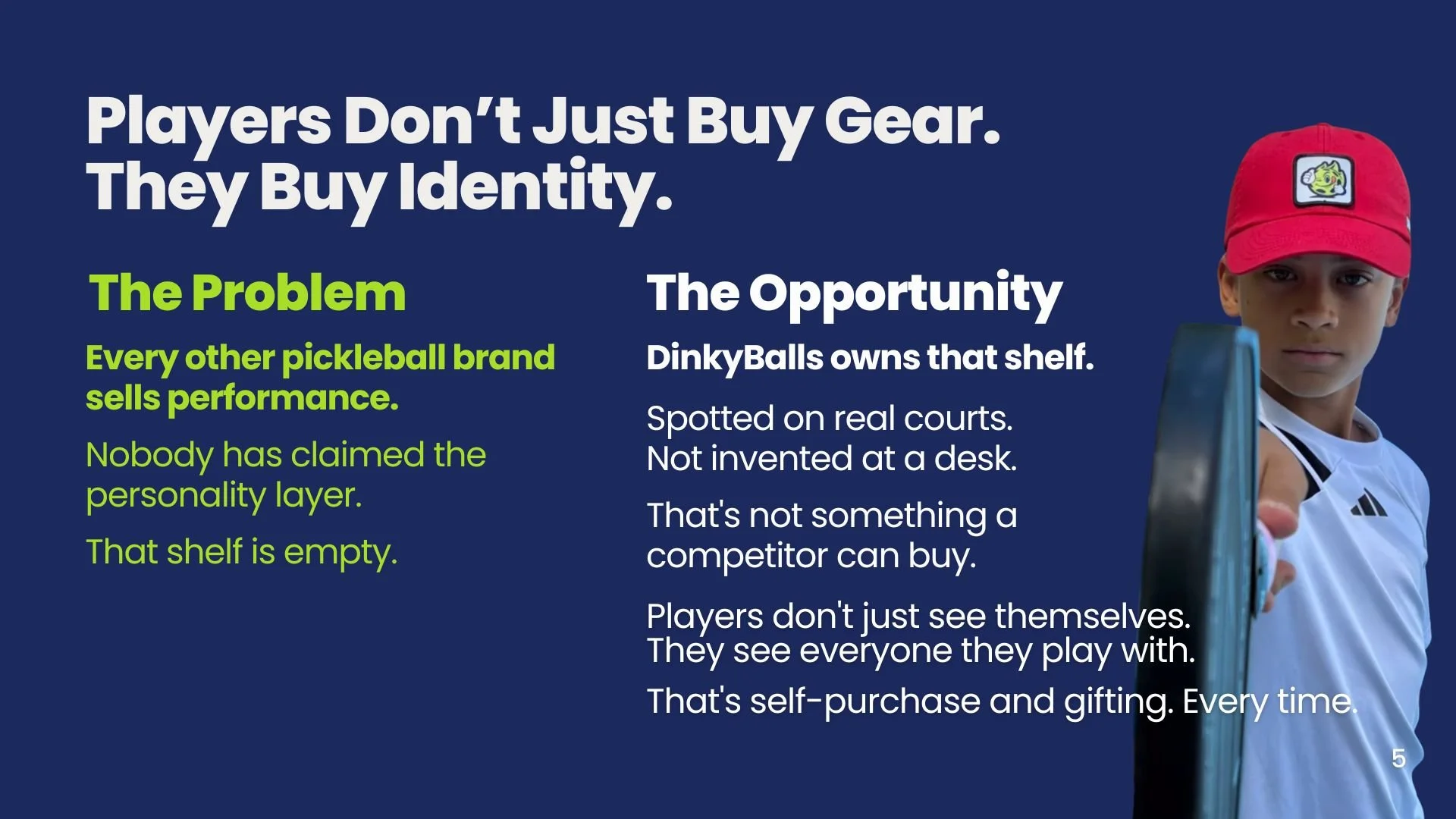
DinkyBalls is the personalities of pickleball.
It is a character-driven brand built for: self-identification, gifting, collectibility, lifestyle extension, content and storytelling, and repeatable product worlds. Most pickleball brands sell performance, paddles, instruction, or generic lifestyle gear.
DinkyBalls sells recognition. Players do not just buy a logo. They buy the feeling of being seen.
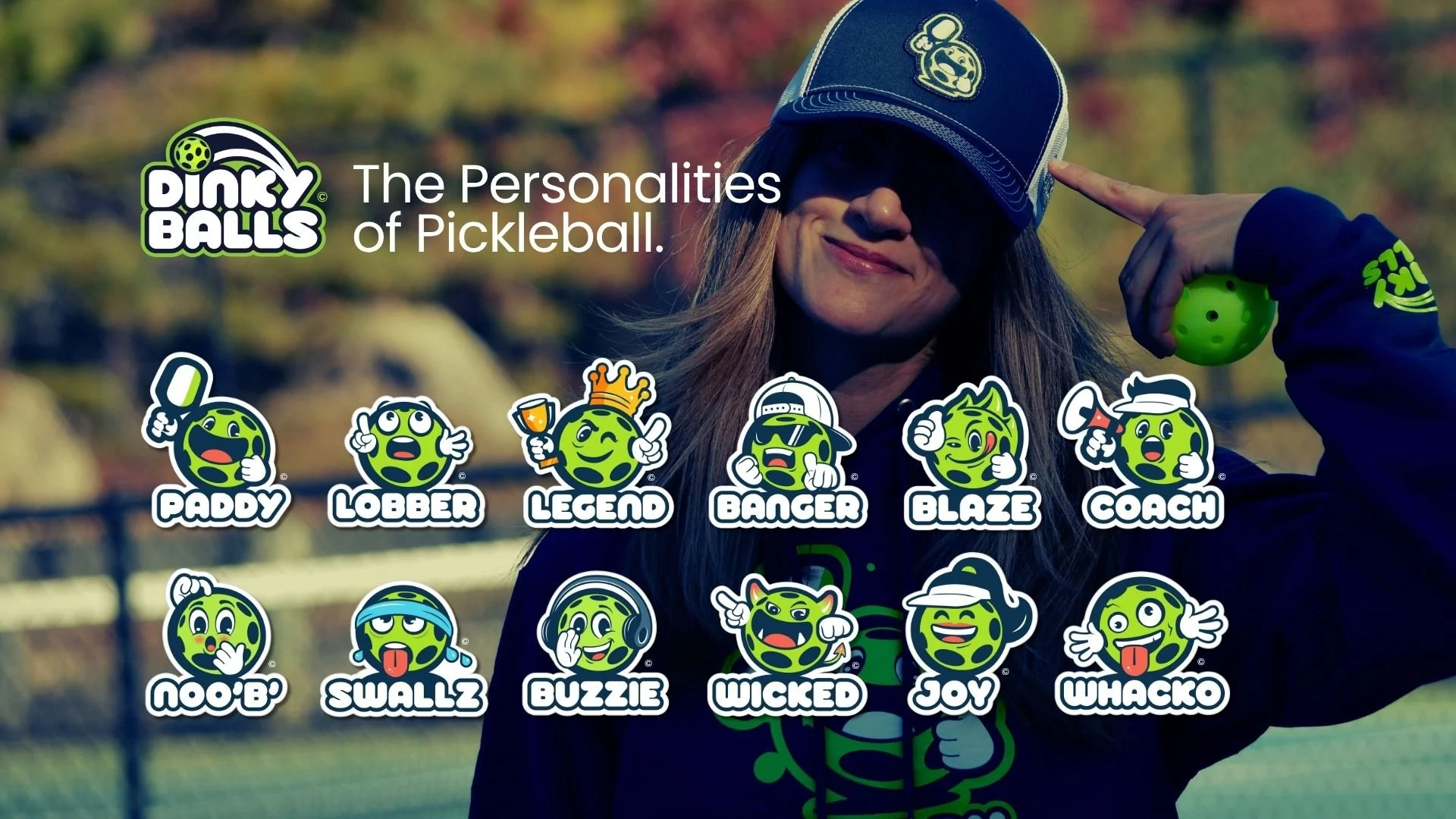
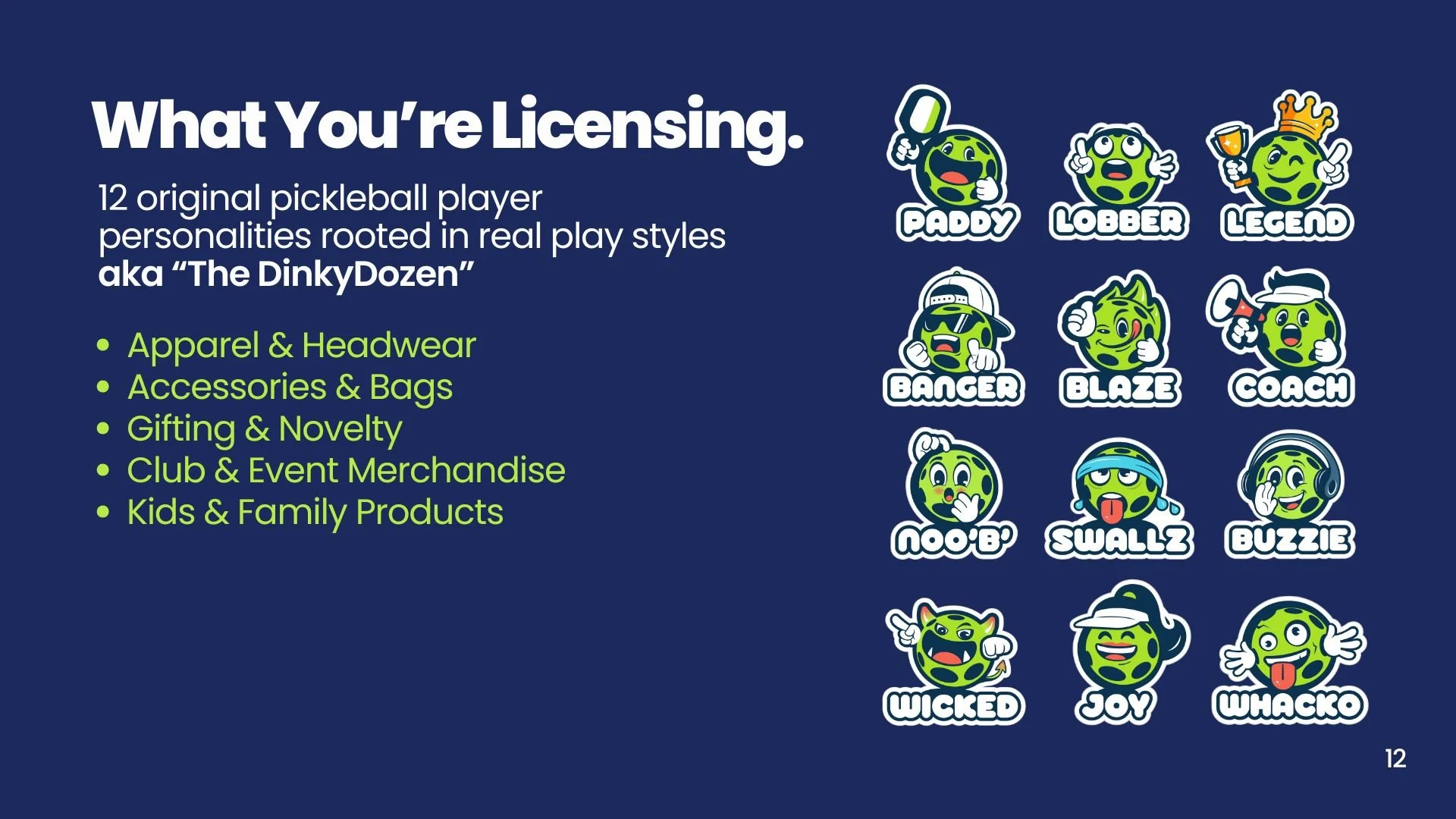
The Dinky Dozen.
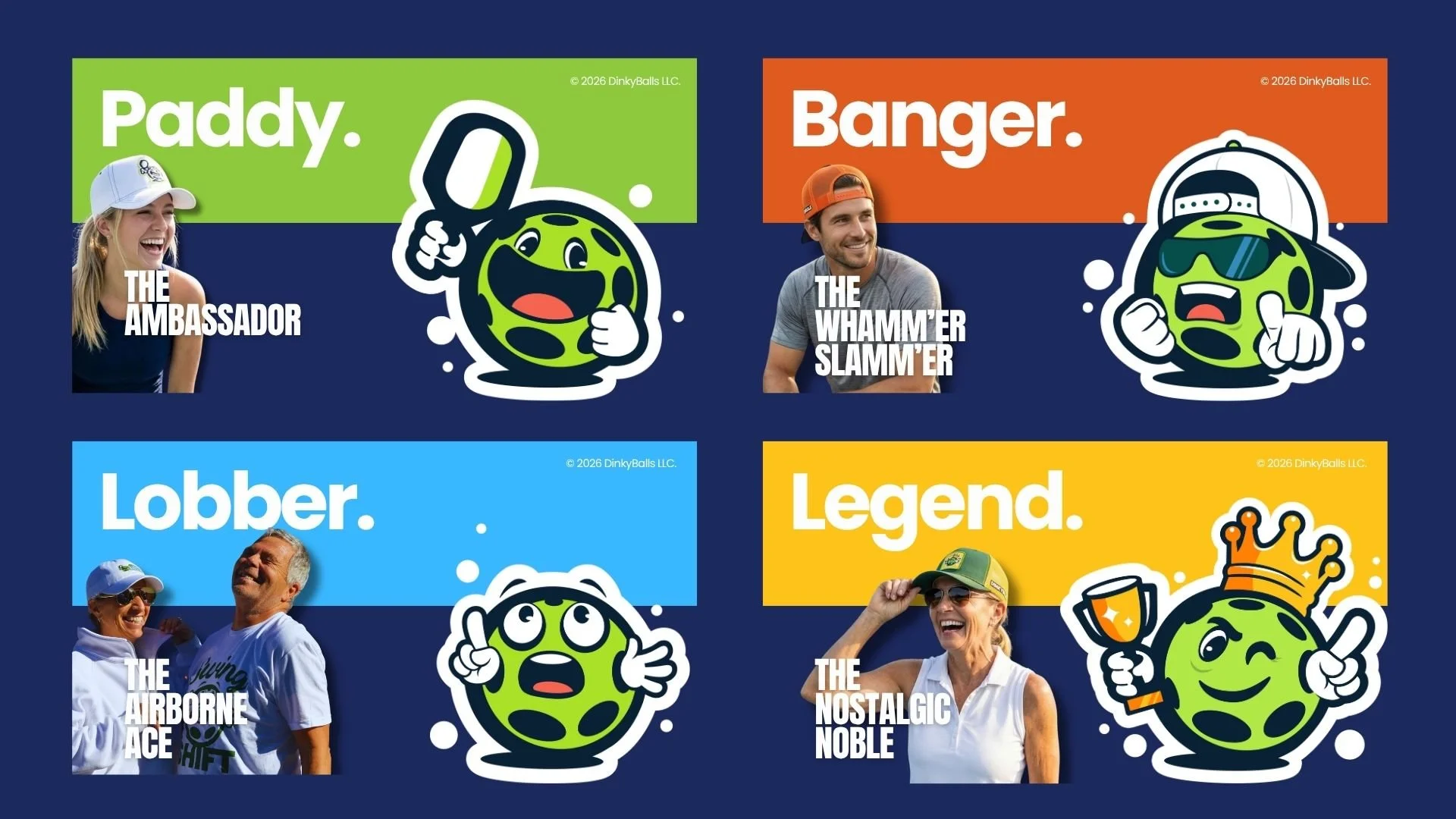
Paddy, The Ambassador
Banger, The Whamm’er Slamm’er
Lobber, The Airborne Ace
Legend, The Nostalgic Noble
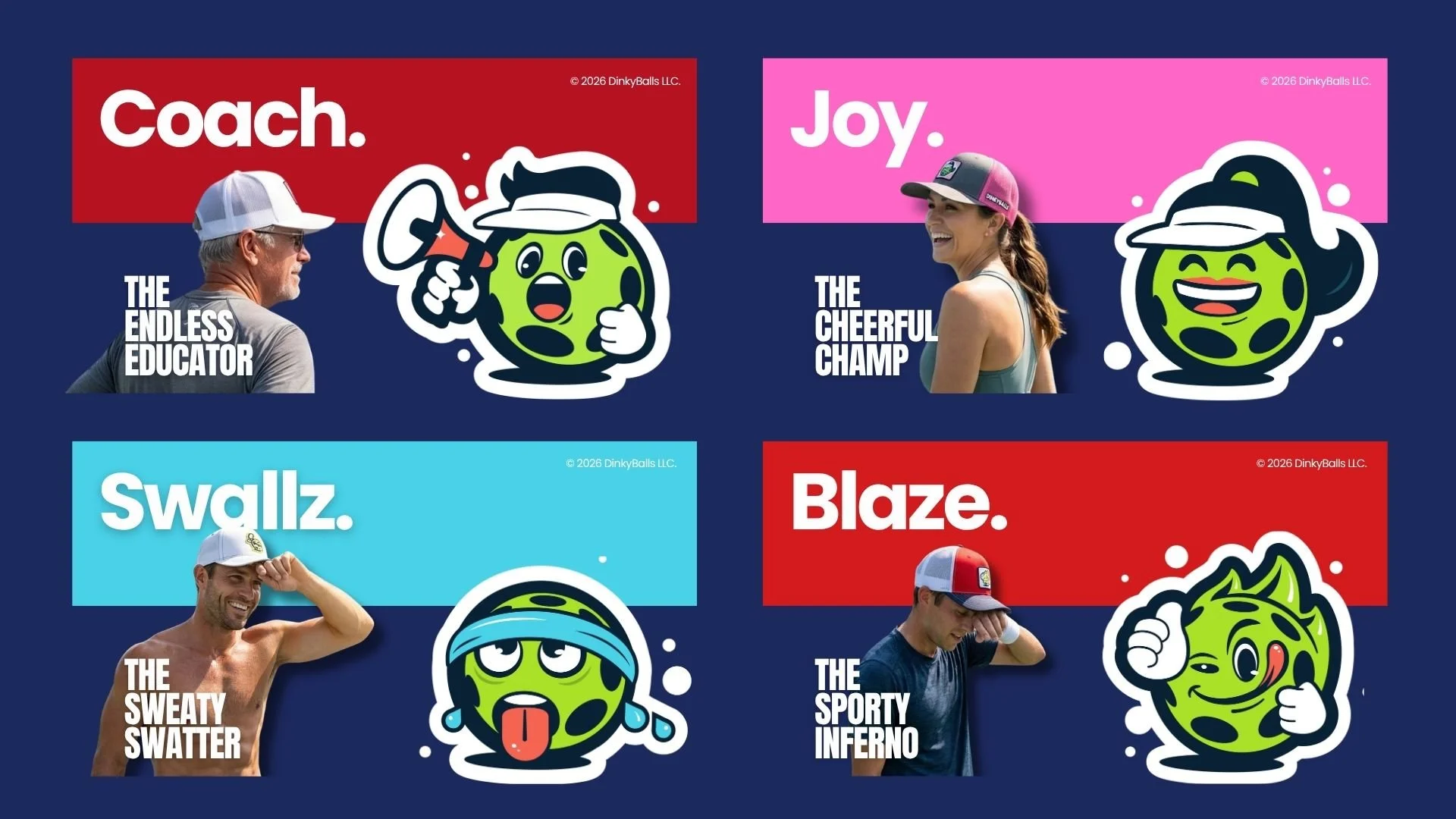
Caoch, The Endless Educator
Joy, The Cheerful Champ
Swallz, The Sweaty Swatter
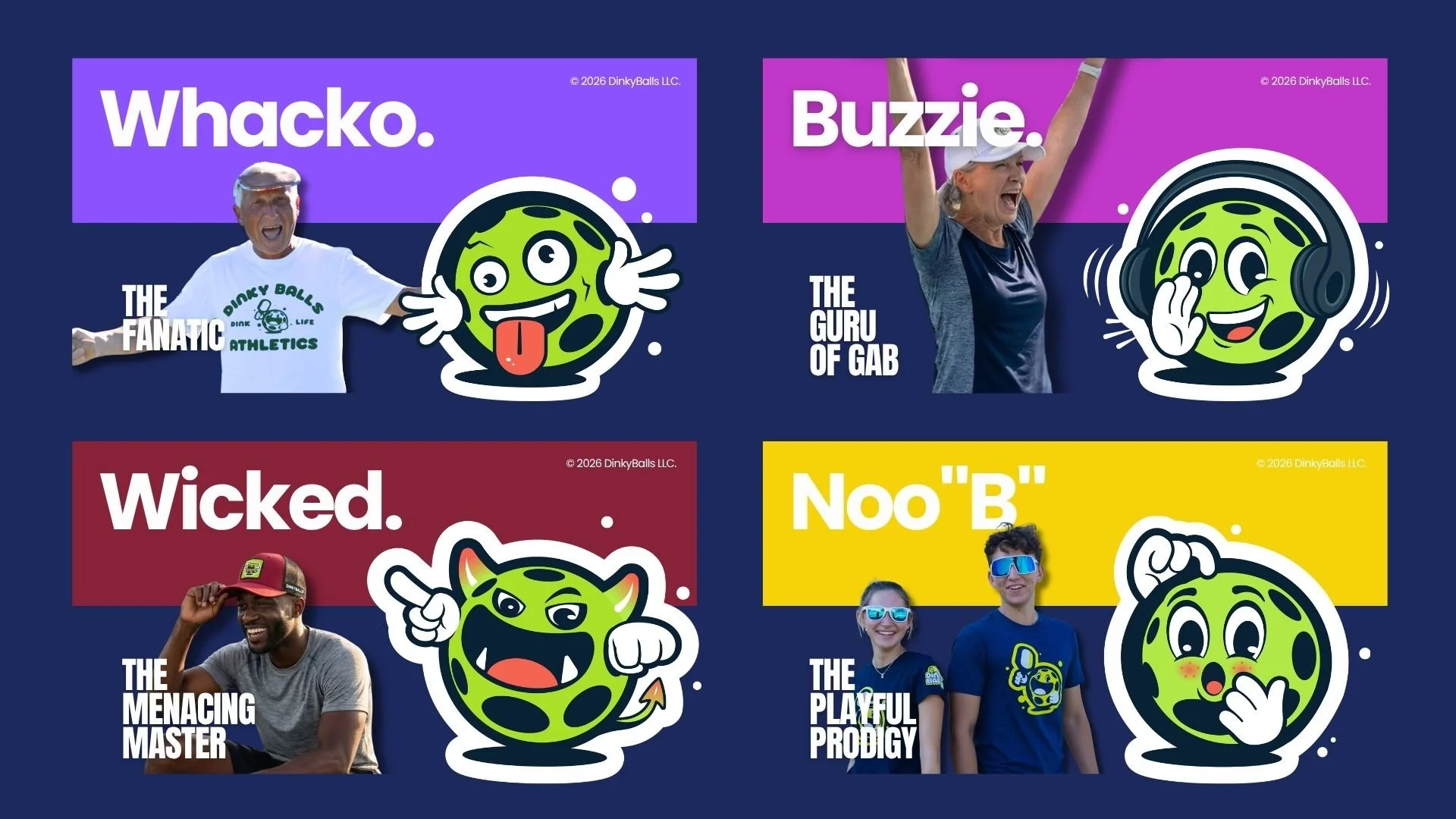
Whacko, The Fanatic
Blaze, The Sporty Inferno
Wicked, The Menacing Master
Noo”B”, Playful Prodigy
Buzzie, The Guru-of-Gab
Why the Characters Work.
Players recognize the type immediately
People identify with one or more characters
Friends and partners use them to describe each other
The names feel like inside jokes, but are easy to understand
Each one creates a clear gifting and collection opportunity
This is important from a licensing standpoint. A single mascot gives you one lane. A system of characters gives you many.
Why the Characters Are Clever.
The cleverness is not just in the illustration. It is in the cultural recognition.
“Banger” is funny because it is true.
“Lobber” is funny because every court has one.
“Coach” is funny because the game is full of them.
“Legend” is funny because pickleball always has its local legends.
“Noo’B’” works because the sport is still onboarding so many first-timers.
That is why the IP feels sticky. It reflects behavior players already understand. This is the difference between a designed character and a culturally rooted one.
The DinkyBalls Universe.
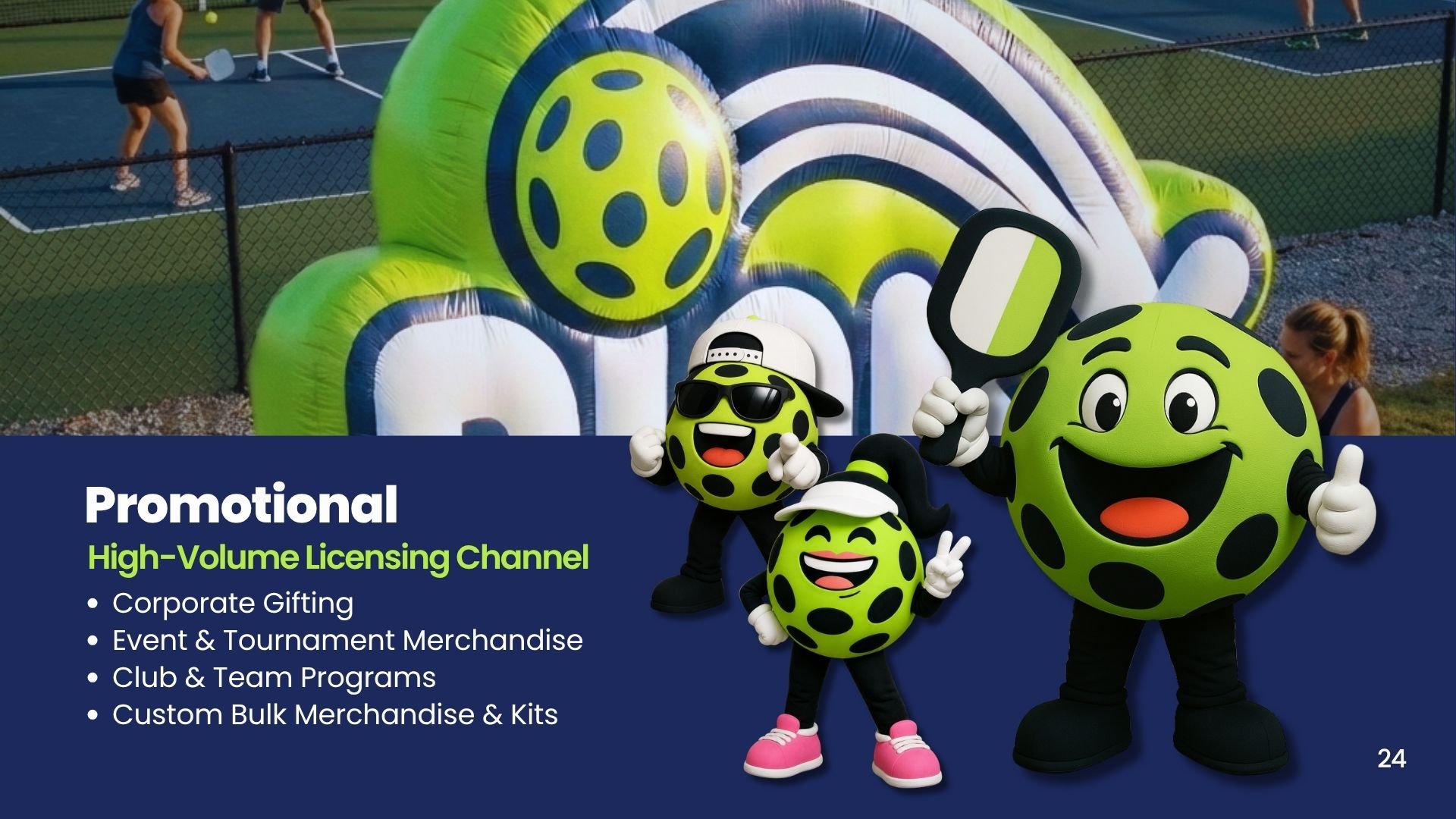
DinkyBalls is not one logo or one hero character. It is a connected universe of player personalities, each with a distinct identity, voice, and visual point of view. Together they form a scalable system that can expand across categories, collaborations, and formats without losing clarity or consistency.
What that unlocks: single-character products, grouped collections, pattern and repeat applications, seasonal stories, giftable pairings, character-led displays, content series, youth extensions, and digital experiences.
This is what makes the brand licensable.
Proof of Early Pull.
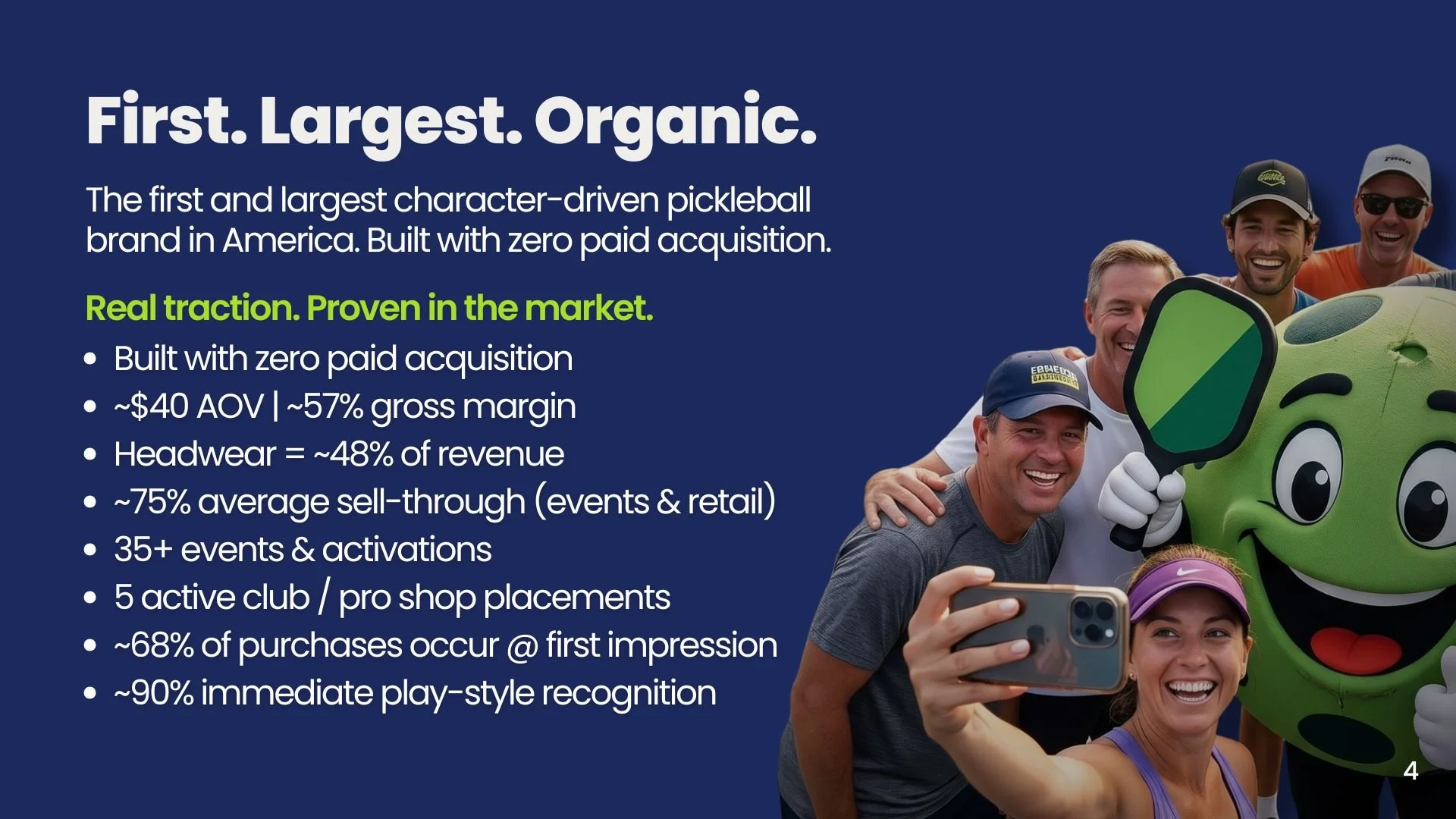
DinkyBalls is still early, but the early signal is real. Current internal operating data shows:
2,300 units sold
730 online orders
$40 online AOV
57% gross margin
30,000+ online store sessions
15% returning customer rate
35+ primary selling events/activations
Average event revenue $1,000
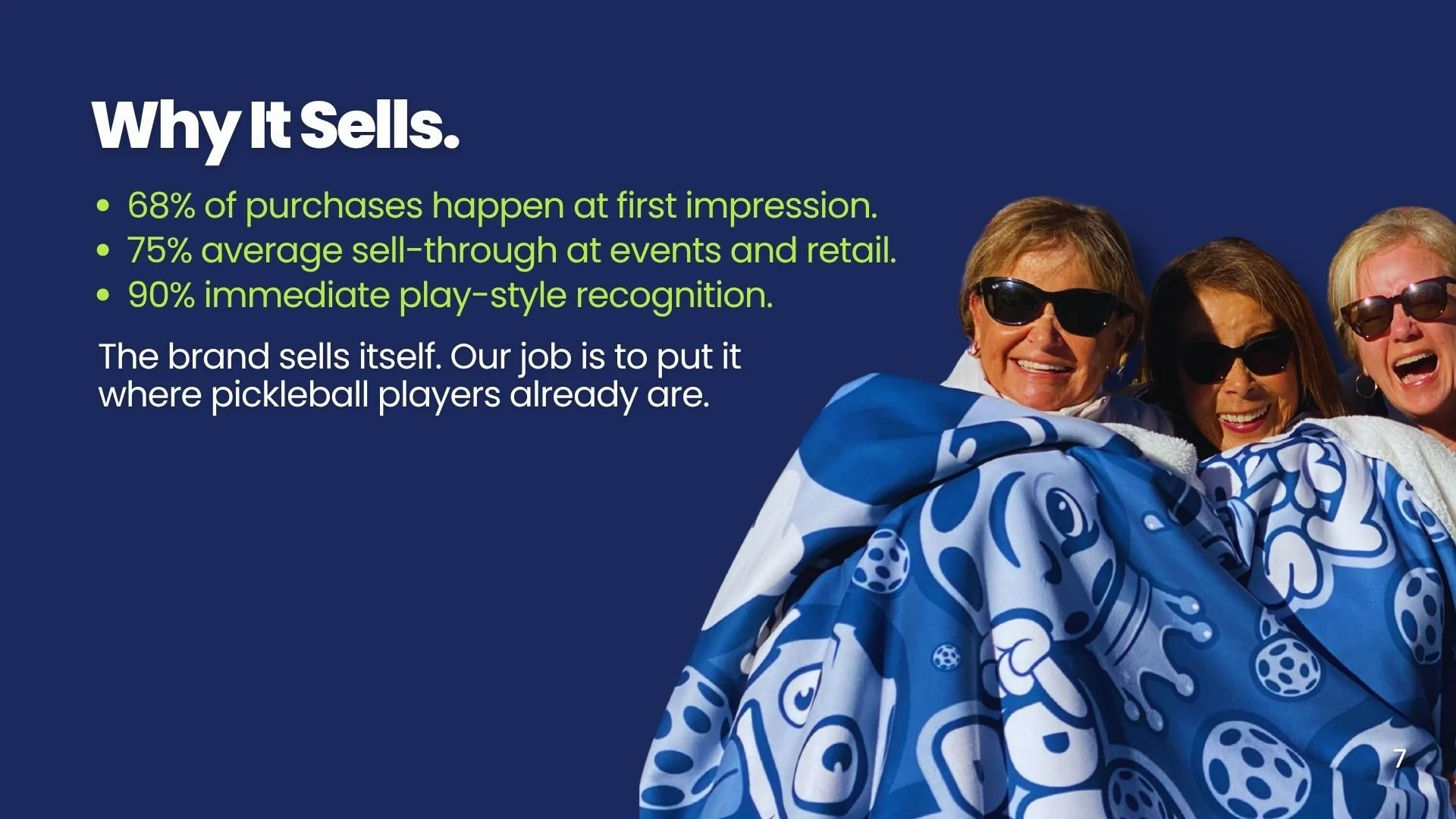
Average event sell-through of 75%
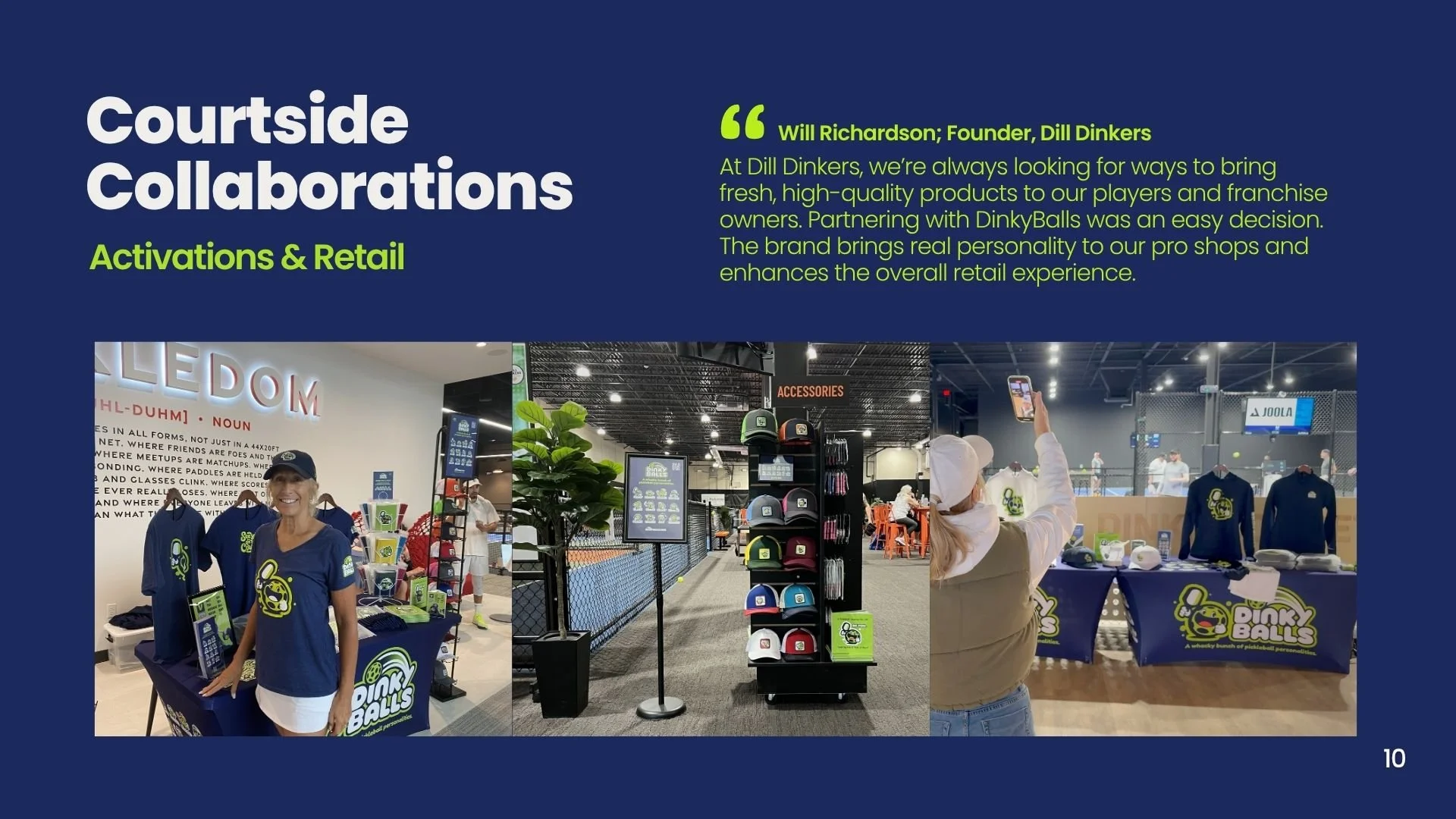
5 Active club/pro-shop placements
Headwear as the top revenue category at 50%
Revenue mix: Onsite: 52% Shopify: 39% Collabs & Other: 9%
The brand performs especially well in physical environments where people can see, feel, laugh at, and identify with the characters in real time. This is not hypothetical interest. It is early behavior.
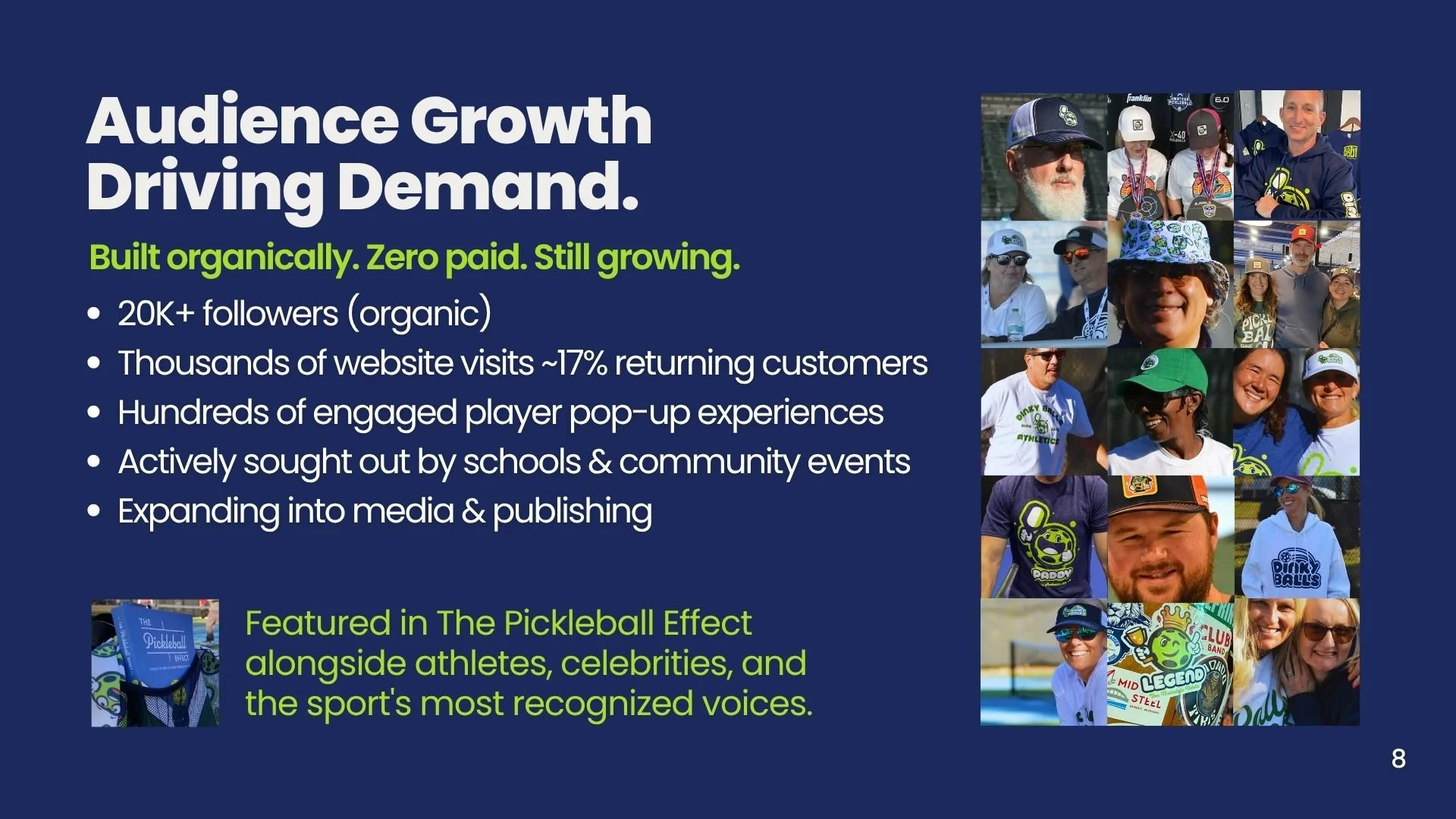
21K+ followers in under a year
Quiz and play-map participation
TikTok filter built for shareable identity
Media exposure including The Pickleball Effect
Original children’s book extending reach
Why This Licenses Well.
From a licensing and manufacturer perspective, DinkyBalls works because:
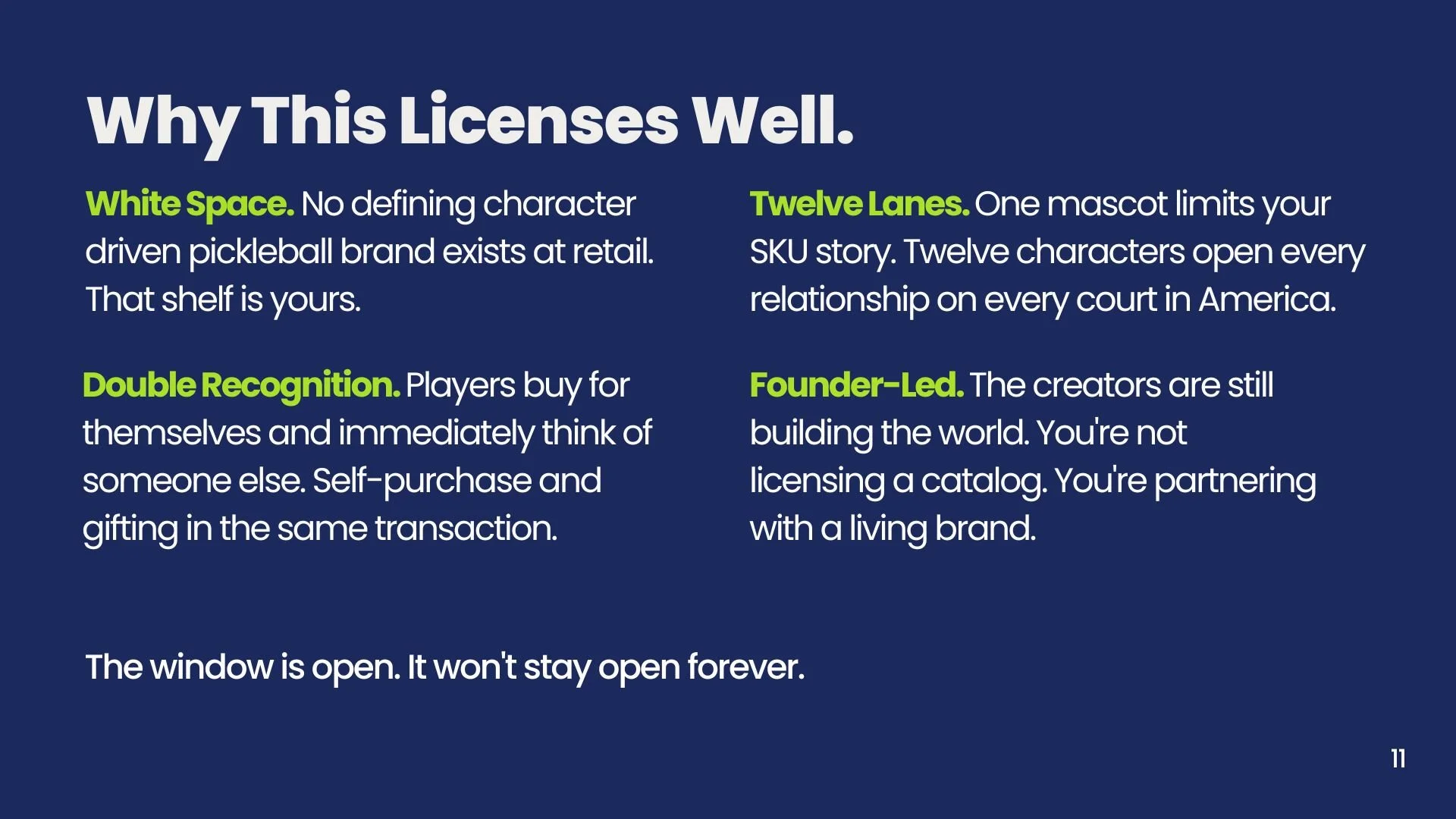
It owns a white space.
No defining character-driven pickleball brand currently owns how players see themselves.
It creates repeatable product logic.
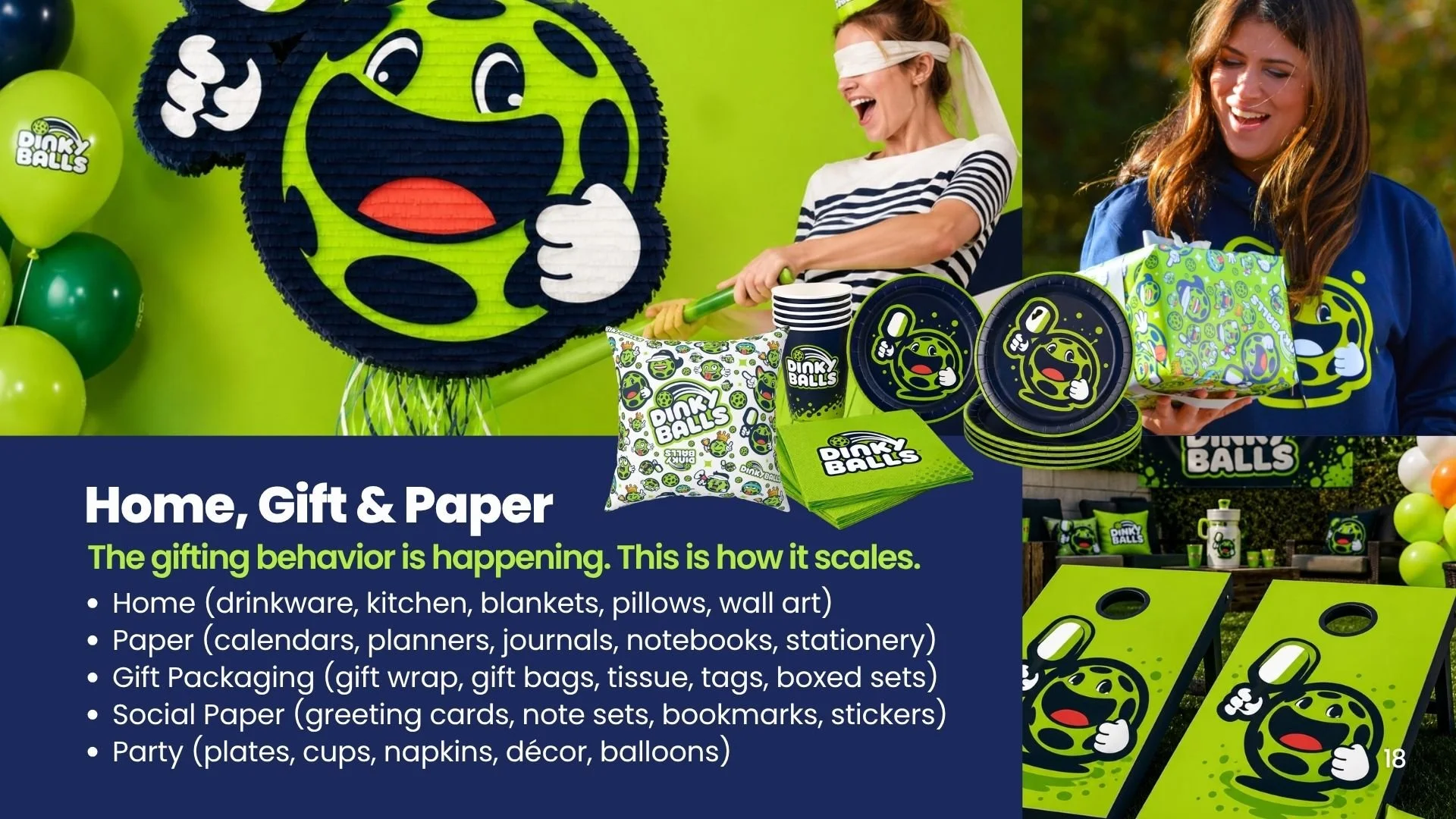
The same character system can support gifting, apparel, home, youth, paper, collectibles, and content.
It supports self-purchase and gifting.
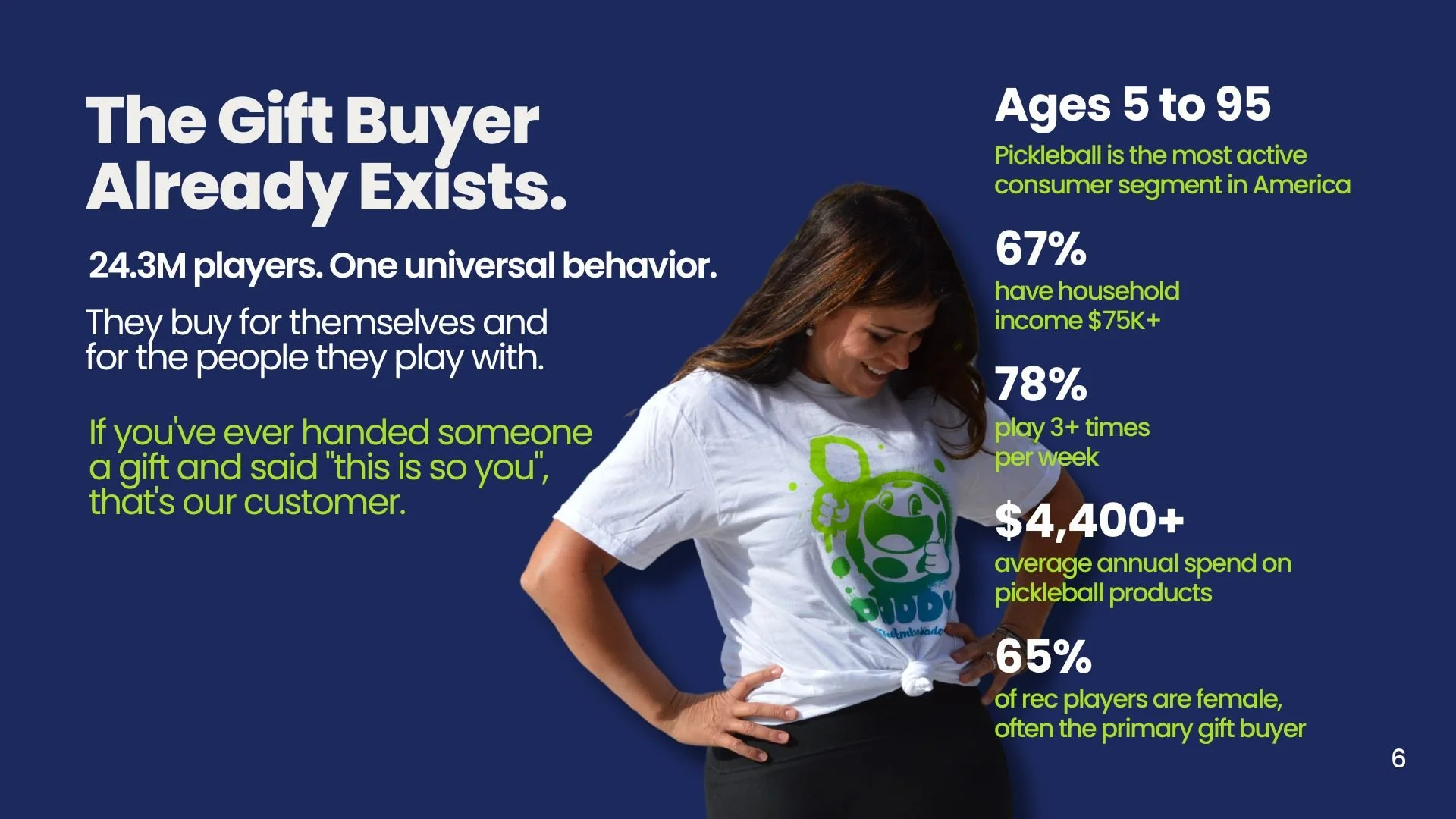
People buy for themselves, for partners, for teammates, for coaches, and for friends.
It is visually ready.
The brand already has characters, patterns, marks, palette, and applications in use.
It is founder-led and culturally active.
The creators are still building the world, not just managing a catalog.
Small Wins First.
The strongest near-term opportunity is in: gifting, impulse, occasion-based products and everyday identity items.Why this is the right place to start: lower risk, easier retail entry, broad audience, fast turns, high “that’s me / that’s them” behavior, and easy self-purchase and gifting logic.
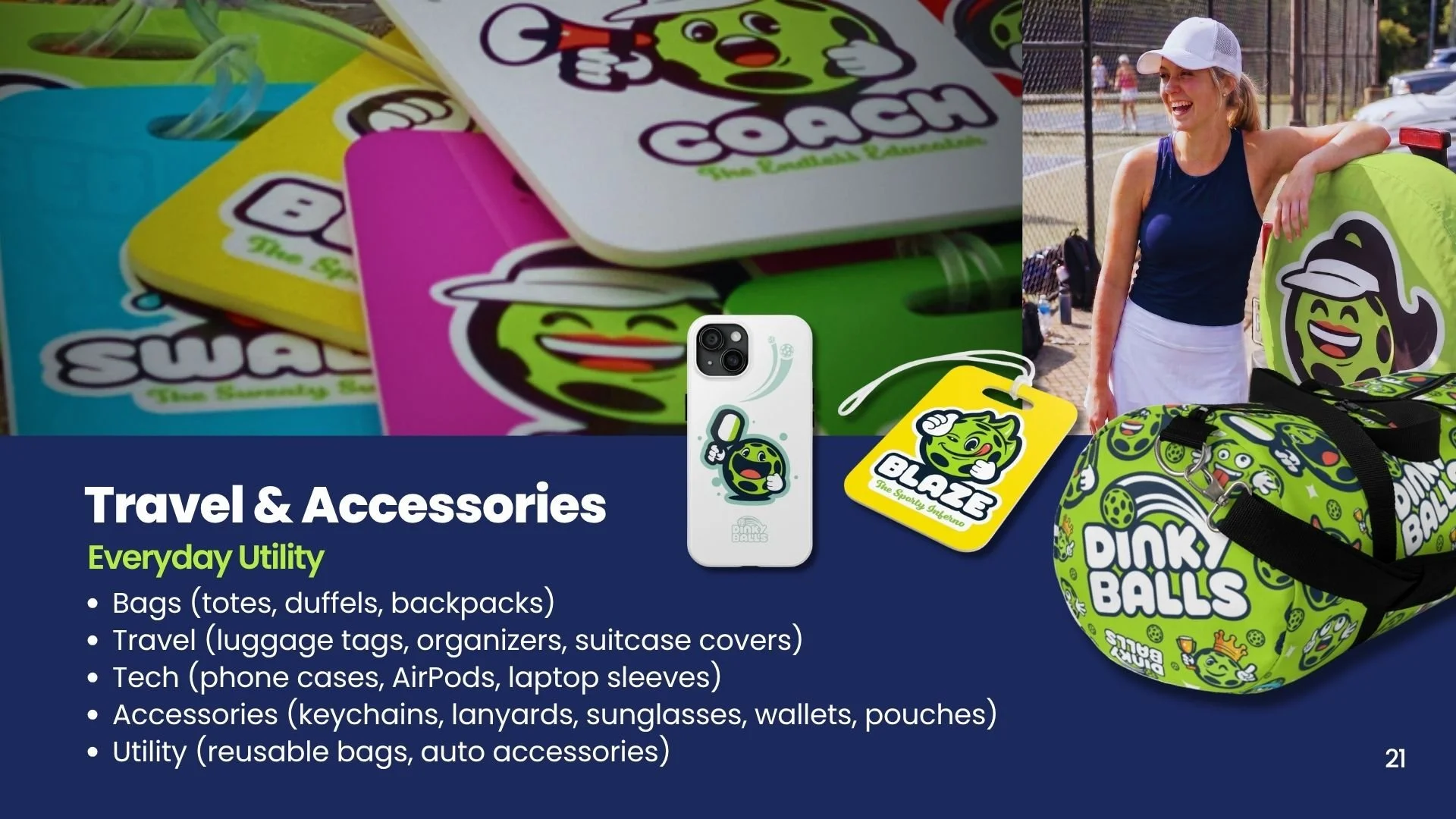
Examples: mugs, calendars, blankets, greeting cards, stickers, bag tags, small home items, and partner/doubles gifts. Easy to pick up. Easy to gift. Easy to relate to.
This is exactly the kind of behavior that works in discovery-driven retail environments and specialty channels.
Path to Scale.
Play: sporting goods and equipment, wellness and performance accessories
Wear: apparel, headwear, footwear, bags, travel, and everyday accessories
Live: home décor, living, youth, toys, games, and collectibles.
Experience: publishing, media, digital content, gaming and interactive, education and training, and selective food and beverage partnerships
This is not a random expansion. It is character-led expansion.
Why Dustin & Lisa Matter.
A licensee is not just buying art files. They are buying into a world that still needs cultural oxygen.
Dustin and Lisa are a meaningful part of the case because:
They built and exited a real indoor pickleball club
They have a court-level insight into player behavior
The brand came from actual observation, not trend-chasing
They are still creating, showing up, and building the world
They understand community, story, and how pickleball culture actually forms
This is an unfair advantage. A competitor can design characters. They cannot easily replicate the lived origin and ongoing proximity to the culture.
Founders Commitment.
Continuing to build the DinkyBalls world
Creating new character-led stories, content, and expression
Supporting product ideation and category fit
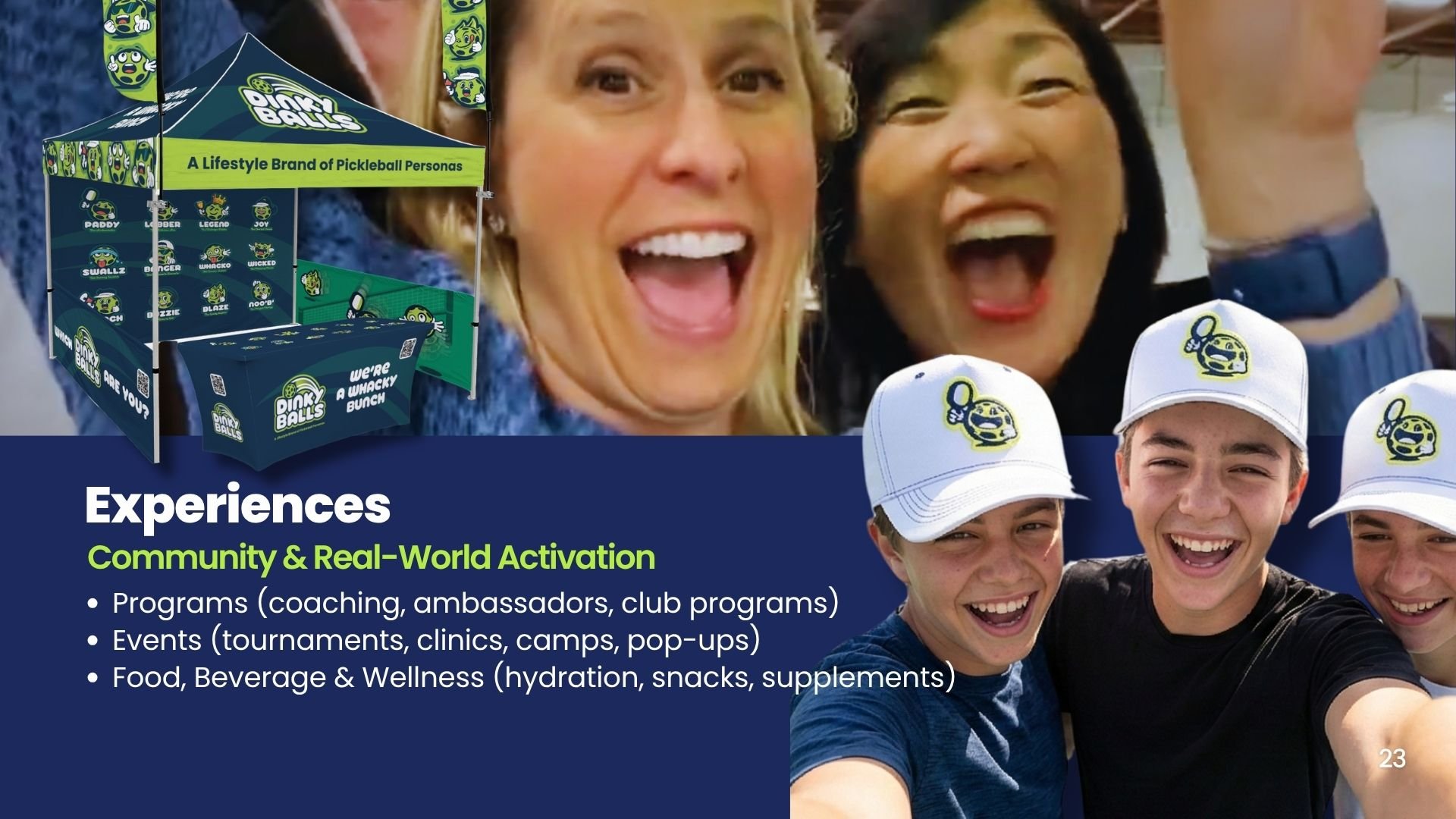
Staying active in clubs, events, and community touchpoints
Amplifying partners through social, content, and real-world activation
Helping identify which characters, products, and stories are pulling hardest
Protecting the integrity, humor, and relatability of the brand
That commitment matters because great licensing programs do not just extend a brand. They keep it alive.
Pickleball’s participation growth is proven, and its sponsor and product ecosystem is scaling. Broader market estimates now place the U.S. pickleball market around $1.1B in 2025 and around $2.6B in 2025, with apparel and equipment expected to keep growing substantially over the next decade.
But the bigger point is this: The next phase of pickleball is not just more paddles. It is brands that capture the culture. That window is open now. It will not stay open forever. DinkyBalls is early enough to matter and developed enough to move.